
Introduction
When homeowners are planning a new driveway, patio, or sidewalk, one of the first questions that comes up is which material is best. Concrete, pavers, and asphalt are the most common options, and each comes with its own benefits and drawbacks.
The right choice depends on budget, appearance, maintenance expectations, and long term performance. Understanding how these materials compare helps homeowners choose a surface that fits their needs today and holds up well for years to come.
Below, we break down how concrete compares to pavers and asphalt across several important factors.
Durability and Lifespan
Concrete is known for its long lifespan. When installed correctly, concrete driveways, patios, and sidewalks can last 30 to 40 years or more. Reinforcement, proper thickness, and base preparation all contribute to this durability.
Asphalt typically has a much shorter lifespan. Most asphalt driveways last between 15 and 20 years, and often require resurfacing during that time. Heat, sunlight, and heavy traffic can accelerate wear.
Pavers are durable individually, but the surface as a whole depends on proper installation and ongoing maintenance. While pavers themselves may last a long time, shifting, sinking, and joint erosion can shorten the functional lifespan of the surface.
Strength and Load Support
Concrete excels at supporting weight. This makes it an excellent choice for driveways that carry vehicles, trailers, or heavier loads.
Asphalt is more flexible than concrete, which allows it to handle some movement. However, it is softer and more prone to rutting, especially in hot climates.
Pavers distribute weight across many individual units, but the base beneath them must be properly compacted. Without a strong base, pavers can shift or sink under load.
For areas that require consistent strength and stability, concrete provides reliable performance.
Maintenance Requirements
Concrete is considered low maintenance. Occasional cleaning and periodic sealing are usually all that is needed to keep it in good condition.
Asphalt requires more frequent maintenance. Sealcoating is typically needed every few years to protect the surface from cracking, oxidation, and moisture damage.
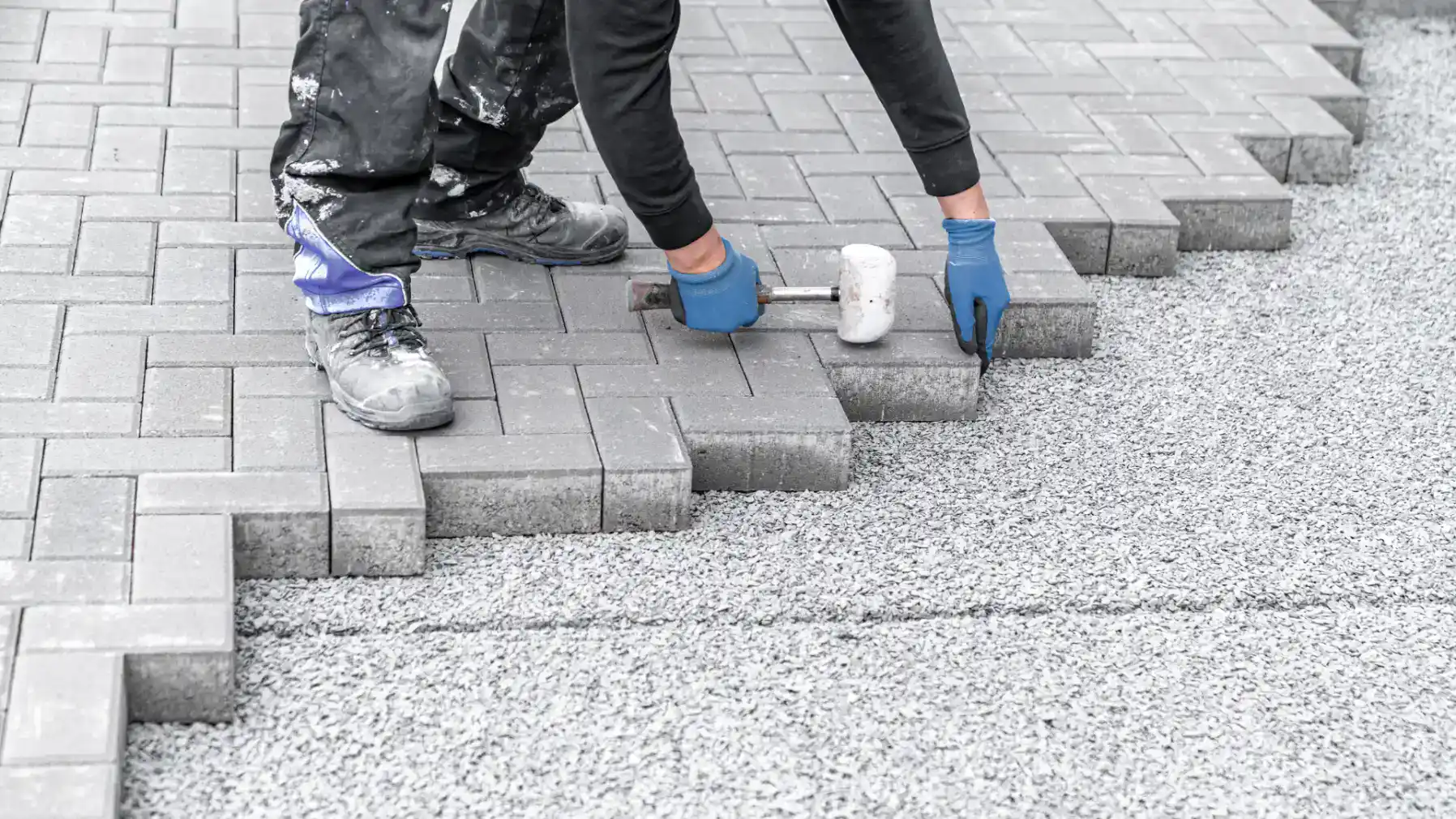
Pavers require ongoing attention to joint sand, weed control, and leveling. Over time, individual pavers may need to be reset or replaced due to movement.
For homeowners who prefer minimal upkeep, concrete offers a clear advantage.
Appearance and Design Options
Concrete is no longer limited to plain gray slabs. Modern concrete offers a wide range of design options, including stamped patterns, decorative borders, exposed aggregate, and color treatments.
Asphalt offers very limited design flexibility. Its appearance is uniform and dark, which may not complement all home styles.
Pavers are often chosen for their visual appeal. They come in many shapes, colors, and patterns. However, this aesthetic benefit often comes with higher upfront cost and increased maintenance.
Concrete provides a balance between customization and practicality, allowing homeowners to achieve a custom look without excessive upkeep.
Cost Comparison
Concrete typically falls in the middle when it comes to cost. It is more expensive than asphalt upfront but usually less expensive than pavers.
Asphalt has a lower initial cost, which makes it appealing for budget focused projects. However, the need for ongoing maintenance and earlier replacement often increases the total cost over time.
Pavers have the highest upfront cost due to materials and labor. Installation is more complex, and repairs can be labor intensive if the base shifts.
When considering long term value, concrete often provides the best return on investment.
Climate Performance
Concrete performs well in a wide range of climates when installed correctly. Proper curing and sealing help protect it from moisture and temperature changes.
Asphalt absorbs heat, which can cause it to soften and deform in hot climates. This can lead to surface damage and reduced lifespan.
Pavers handle temperature changes well, but freeze and thaw cycles can affect the base and joint material, leading to movement over time.
Concrete offers consistent performance across varying conditions when proper installation practices are followed.
Repair Considerations
Concrete repairs are typically straightforward. Cracks can often be sealed or repaired, and small sections can sometimes be replaced if necessary.
Asphalt repairs are more frequent. Cracks, potholes, and surface wear often require patching or resurfacing.
Paver repairs can be more complex. While individual pavers can be replaced, matching colors and resetting the base can be time consuming.
Concrete offers a balance of repairability and long term stability.
Environmental Considerations
Concrete is a long lasting material, which reduces the need for frequent replacement. Its durability contributes to sustainability over time.
Asphalt is petroleum based and requires regular resurfacing, which increases material use.
Pavers can be reused, but production and transportation contribute to environmental impact.
Concrete can also be produced using supplementary materials that reduce environmental footprint.
Conclusion
Concrete, pavers, and asphalt all have their place, but concrete often stands out as the most practical and durable choice for driveways, patios, and sidewalks. Its strength, longevity, low maintenance requirements, and design flexibility make it a reliable option for homeowners who want long term value.
While asphalt may offer lower upfront cost and pavers provide high visual appeal, concrete delivers a strong balance of performance and affordability. When installed correctly, concrete provides decades of dependable service with minimal upkeep.