
Introduction
One of the most common questions homeowners ask before installing a concrete driveway or patio is whether reinforcement is really necessary. Concrete is known for its strength, but it also has a natural weakness. It is strong in compression but weak in tension. This means concrete can support heavy weight from above, but it can crack when the ground shifts or when pressure pulls it apart.
Reinforcement helps concrete stay intact over time. While concrete will almost always develop small cracks, reinforcement keeps those cracks from spreading or separating. Understanding the difference between rebar and wire mesh helps homeowners make informed decisions and avoid premature failure.
Why Concrete Needs Reinforcement
Concrete cracks for many reasons. Soil movement, temperature changes, moisture, and heavy loads all place stress on a slab. Even well installed concrete will eventually crack, but reinforcement controls how those cracks behave.
Reinforcement does not prevent cracking entirely. Instead, it holds the concrete together when cracking occurs. This helps prevent uneven settling, lifting edges, and structural separation that can lead to costly repairs or replacement.
For driveways and patios that are expected to last decades, reinforcement plays a major role in long term performance.
What Is Rebar and How Does It Work?
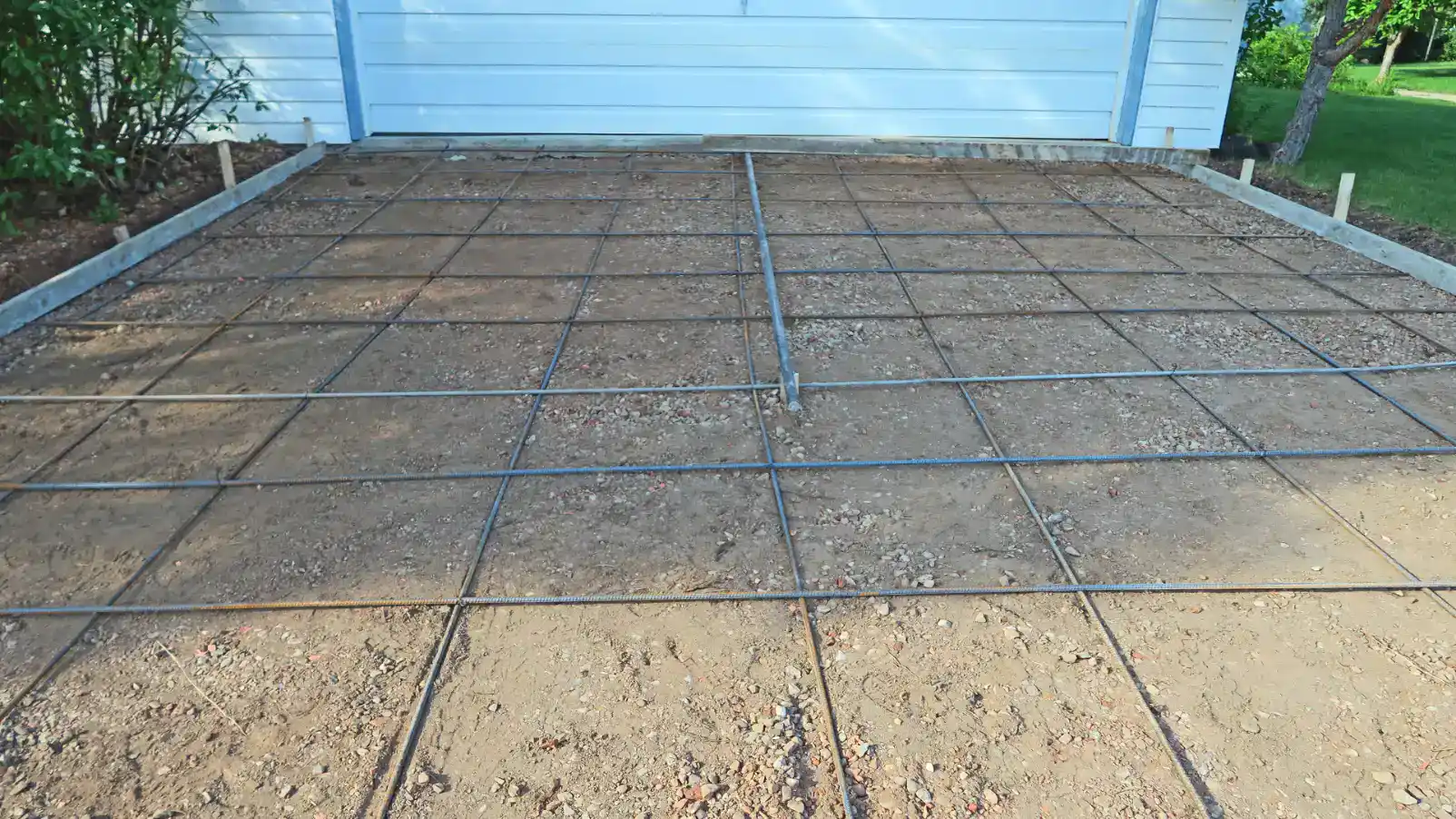
Rebar, short for reinforcing bar, is steel placed within the concrete before it is poured. It is commonly used in driveways, foundations, and structural slabs.
Rebar provides strong internal support that helps concrete handle tension and heavy loads. When vehicles drive over a reinforced driveway, the rebar distributes weight evenly across the slab. This reduces stress in weak areas and minimizes cracking.
Rebar is especially important for driveways that support trucks, trailers, or frequent vehicle traffic. It is also recommended in areas with unstable soil or where settling is common.
For best results, rebar should be placed within the lower portion of the slab and supported so it does not rest directly on the ground.
What Is Wire Mesh and When Is It Used?
Wire mesh is a grid of thin steel wires laid into the concrete slab. Its primary purpose is crack control rather than structural strength.
Wire mesh helps hold the concrete together when small surface cracks form. It is often used in patios, sidewalks, and light duty slabs where heavy loads are not expected.
While wire mesh does add reinforcement, it is not as strong as rebar. If mesh is not installed correctly and ends up sitting at the bottom of the slab, it becomes far less effective.
Wire mesh is best suited for flatwork that will experience minimal weight and movement.
Rebar vs Wire Mesh for Driveways
For driveways, rebar is generally the better option. Driveways support vehicle weight, turning pressure, and braking force, all of which place stress on the concrete.
Rebar provides the strength needed to prevent slabs from shifting or separating over time. While wire mesh may help control small cracks, it does not provide the same level of structural reinforcement as rebar.
In many professional installations, rebar is considered standard for driveways that are built to last.
Rebar vs Wire Mesh for Patios and Sidewalks
Patios and sidewalks often experience less stress than driveways, which means wire mesh may be sufficient in some cases. However, soil conditions, slope, and drainage still matter.
In areas with expansive soil or poor drainage, rebar can still be a smart choice for patios. It adds stability and helps prevent uneven settling.
Sidewalks may use wire mesh or rebar depending on width, thickness, and expected foot traffic. In all cases, proper base preparation is just as important as the type of reinforcement used.
Fiber Reinforcement vs Steel Reinforcement
Some concrete mixes include fiber reinforcement, which consists of small fibers mixed into the concrete. Fiber helps reduce surface cracking and shrinkage but does not replace steel reinforcement in structural applications.
Fiber is often used in combination with rebar or mesh, not as a substitute. For driveways and structural slabs, steel reinforcement is still recommended.
Is Reinforcement Always Required?
Small projects like garden paths or decorative slabs may not require reinforcement. However, for driveways, patios, and sidewalks that are meant to last, reinforcement is a smart investment.
Skipping reinforcement may save money upfront, but it often leads to cracking, shifting, and costly repairs later.
Conclusion
Rebar and wire mesh both play important roles in concrete reinforcement, but they are not interchangeable. Rebar provides strength and load support, making it ideal for driveways and structural slabs. Wire mesh helps control cracking and works well for light duty applications like patios and sidewalks.
Choosing the right reinforcement depends on how the concrete will be used, soil conditions, and long term expectations. When installed correctly, reinforcement significantly extends the life of your concrete and protects your investment.